
 Spotify
 Apple Podcasts
 Castro
 RSS Feed
 More Than The Mission with Chris Russell

Send us Fan Mail We sit down with retired Air Force intelligence officer and leadership coach Chris Russell to unpack the leadership lessons behind his book More Than a Mission. We talk followership, purpose, crisis leadership, and why clear communication and real accountability are the difference between task completion and true success. • Chris’s path from ROTC to fighter units, Weapon School, special operations support, and command at NSA • why leadership success requires skil...
We sit down with retired Air Force intelligence officer and leadership coach Chris Russell to unpack the leadership lessons behind his book More Than a Mission. We talk followership, purpose, crisis leadership, and why clear communication and real accountability are the difference between task completion and true success.
• Chris’s path from ROTC to fighter units, Weapon School, special operations support, and command at NSA
• why leadership success requires skills beyond the job skills that earn promotion
• learning from both great leaders and toxic leaders, including what not to copy
• followership as active responsibility, mission understanding, and smart questions
• delegating authority instead of only delegating tasks
• leaders as both born and made, with deliberate development and trust
• finding purpose by leaning into what you love and what you do well
• alignment, clarity, and buy-in as drivers of morale and retention
• crisis leadership as calm thinking, not panic reactions
• training and systems as the real foundation under pressure
• debrief culture and accountability that improves the whole team
Reach out to Chris here, and you can purchase "More Than A Mission" here.
We invite you to join other courageous leaders at travisyates.org
Join Our Tribe of Courageous Leaders:
Get The Book
Get Weekly Articles by Travis Yates
Join Us At Our Website
Get Our 'Courageous Leadership' Training
Join The Courageous Police Leadership Alliance
00:00 - Welcome And Guest Setup
01:00 - Childhood Teammates And Early Leadership
02:20 - From ROTC To Elite Intel Teams
08:50 - Learning From Great And Bad Bosses
11:20 - Followership And Delegating Authority
14:25 - Are Leaders Born Or Made
18:05 - Purpose Alignment And Low Morale
25:45 - Crisis Leadership And Staying Calm
30:20 - Debriefs Build Accountability And Trust
33:20 - How To Reach Chris Russell
34:45 - Final Takeaways And Farewell
Welcome And Guest Setup
Announcement
Welcome to Courageous Leadership with Travis Gates, where leaders find the insights, advice, and encouragement they need to lead courageously.
Travis Yates
Welcome back to the show. I'm excited about today's guest. Without further ado, we're bringing on Chris Russell. Chris is a retired U.S. Air Force intelligence officer. He's a leadership coach. He's a keynote speaker who equips teams to perform with clarity, empathy, and purpose. He's a combat veteran who led high-performing teams in complex high-stakes environments. And today he brings that same focus and clarity to help organizations build resilient cultures, elevate team performance, and strengthen accountability at every level. Chris is the author of the excellent book. I can't recommend it more, a book called More Than a Mission. And man, it is something you gotta get. And we'll talk to Chris about all that and everything else that he's done. Chris Russell, how are you doing, man?
Childhood Teammates And Early Leadership
Chris Russell
I'm doing good, brother. Man, it's great to uh to be here with you. I appreciate you having me on, man.
Travis Yates
Well, Chris, uh, we're we're more than just sort of uh we met on LinkedIn type of friends, right? We've known each other for I don't know, 40 years, maybe.
Chris Russell
I was thinking I was thinking about that. I think the first team we were on together is when we were 12. And I think it was East Side Office when we were 12 years old.
Travis Yates
Oh my goodness. Yeah. Wow, man. Well, I can tell you, uh, leadership aside, you're you're looking at one hell of a catcher right here on the on the on the screen. So uh boy, Chris could catch a ball, that's for sure. Uh a position that I could never have the guts to play. But man, kind of walk us through. I mean, obviously, we both got out of that baseball game about college time, and and you went your way and I went mine, and we sort of found ourselves back together talking again about a lot of this stuff because we have a lot of this stuff in common. But tell our audience about your journey um, because obviously it's military-based, but it's a very interesting journey how you sort of come back to full circle doing this leadership coach thing.
From ROTC To Elite Intel Teams
Chris Russell
Yeah, so I uh lived my whole life in Arkansas and then, of course, went to the University of Oklahoma, much to my dad's chagrin, right? And uh I got commissioned through Air Force RTC there. And I joined the Air Force the same reason everybody else did, man, to be a fighter pilot. And uh it turns out my color vision was too bad, which I didn't know at the time. And um, so our commander in ROTC, our colonel, he said, Hey, did you know there's an intelligence officer in every fighter squadron? And I said, I did not know that. And he said, You should look into it. And that's how I became an intelligence officer and spent uh most of the first half of my career uh in fighter units. Uh, was lucky enough to be in the 27th Fighter Squadron, which is the oldest fighter squadron in the Air Force, dates all the way back to World War I, 1917. Uh, it was an incredible squadron to be in. Um, they flew F-15s when I was there. Uh, they fly F-22s now. Uh, was in the Fourth Fighter Wing, flying uh strike eagles, F-15Es, air-to-ground, air-to-air mission. Um, just an awesome platform. Was uh fortunate enough early in my career uh to get to go to the Air Force Weapon School, which uh it's okay if nobody's ever heard of that, but that is the Air Force version of the Navy's Top Gun School. Uh only actually actually our school's been around a lot longer than the Navy's. They uh they actually modeled their school after hours. They just get the cool movies. Uh but I'm way over that, as you can tell. Um, but uh that experience, that environment uh changed my career, it changed my life, and especially with what I'm doing now in the leadership spaces. Um, that school, yes, it's about advanced tactics and things like that, but it it truly is a leadership school about leading high performance teams, uh holding high standards, holding each other to high standards. Um, and it was uh just one of the best things I ever uh got to do. I got to be an instructor there as well. Uh, and uh it was truly a formative time. In the middle of my career, I spent some time with the Army, kind of an Air Force appreciation tour. Um, I went to Commander General Staff College with the Army at Fort Leavenworth. Um, we call it professional military education. And out of that job, or out of that school, uh, I went to be the Deputy Director of Intelligence for uh what we call Special Operations Command Central, uh SOC Cent, that's what we call it. It's a joint special forces unit. So got to work with Green Berets, Navy SEALs, Marine Special Operators, Air Force Special Tactics guys. That's what I went to Afghanistan with. Some of the best training I've ever gotten in my life, uh, as you might imagine. Uh again, uh lots of leadership learning from those guys as well. I was the speech writer at the Pentagon for a year, uh, which was very interesting. Uh, I was a speech writer for a three-star general who is uh the general in charge of all of Air Force intelligence. Um it was a great job. Uh got to see lots of things that I never would have seen uh had I just been uh another 05 on the air staff. And then uh fortunate enough to get selected to be a squadron commander at the National Security Agency, command of the 22nd Intelligence Squadron at NSA, which another another squadron that traces its heritage back to World War I, uh to the 22nd Pursuit Squadron. 400 of the smartest airmen you've ever seen in your life. Um they were all linguists or signals analysts. I was neither. Uh, you know, I had come from the the football locker room part of the Air Force, uh, and these guys um, well, they call themselves the nerds of the Air Force. And I say that with all the love in my heart for my airmen uh because they were truly awesome. Uh, but uh two years in command there, it was just a terrific time uh seeing those uh those guys do the work. Nine total deployments, all to the Middle East. Had friends that got to go to cool places like Eastern Europe and Scandinavia, Japan, South Pacific. Nope, all of mine to the Middle East. Uh so lots of time over there. And then uh retired in 2016, went to work for a company that contracts to the military. Um, everybody in the company, we'd all been on active duty together. So I didn't have to learn anybody new, didn't have to learn any new skills. We we consulted on what we call ISR, intelligence, surveillance, and reconnaissance. So I would just show up in a room and tell people what I know about ISR, and it was awesome. Um, had some really great uh contracts with that with that company. Just the last two years, uh I'd been on the road way more than I wanted to be, over half the weeks of the year. Um, and I just couldn't do that anymore. And so when the travel schedule came out in January of 2024, and it was gonna be the same thing, I just I called my boss and I said, Boss, I just I can't do it. And so I left there. It was a tough decision because I didn't have anything else immediately uh lined up and I didn't do anything for I don't know, about six months or so. Um and then the summer of 24, five people, all independent of each other, told me, dude, you have got to write a book. And my wife, Cindy, had been telling me this for 10 years. You should write a book, and I never knew what I would write about because I have awesome stories to tell, right? They're all just classified, and they are going to be classified forever. So I can't tell you all of my cool stories. So I just sat down and I just went assignment by assignment in order and just started writing the things I remember. And what I realized is that I was writing about leadership lessons, both good and bad. And then it hit me, okay, this is a leadership book. And that's how that evolved and became into more than the mission. Uh, the idea behind the title is the skills that get you promoted into leadership positions, the job skills that you have that get you recognized and promoted guarantee you exactly nothing about your success as a leader because those are two different skill sets and they must be developed together so that when you are put into those leadership positions, uh you're ready to deliver different skills than the ones that actually got you promoted. I established uh the Russell group about the same time and um, like you said, been uh been working with some uh organizations around the Tulsa area here uh over the last year, and uh it's been great.
Learning From Great And Bad Bosses
Travis Yates
Yeah, Chris, uh those of you that are looking for a speaker at your conference or your agency, you need to get a hold of Chris Russell. I'm telling you, I've seen him speak. I've obviously read his book a couple of times now. I went back over again last night called More Than a Mission. It's just something you have to have, uh, because it's the real deal. And and Chris, I could I think I know what you're gonna say here, but and by the way, this is why we don't talk about my experiences because I would have taken about three seconds and you got to tell us these really cool places you've gotten to go to. So I would say, well, I moved to Tulson after college, and that's about it. And so that'd be what that's what I want to say. But but how did you determine? Because the military is obviously different than law enforcement, it's different than public safety. Is you guys put a preeminence on leadership from day one. May not be the right leadership, but I mean, when you went to that leadership school, that wasn't the first time you heard about leadership. Whereas in law enforcement, oftentimes it's the first time people ever hear about it if they go to some sort of training after a basic academy. So you kind of hear that from day one, but it's not always the right leadership, sometimes it's always the wrong leadership. Did you sort of absorb that throughout your career and kind of go, okay, I'm I'm not gonna be like this, but I'm gonna be like this, and kind of put that hodgepodge together when you wrote your book? For sure.
Followership And Delegating Authority
Chris Russell
And uh, you know, the the first boss that I talk about in the book is is my mental Rolodex of things I never want to be as a leader. Um, you know, he he was the public yeller and didn't want to hear dissenting opinions or anything like that. And I mean, I'm a I'm a brand new second lieutenant right out of Intel officer training, and I'm like, surely this is not what all of them are like. Um, and in my second assignment in the 27th Fighter Squadron, I was lucky enough to have a great example of uh a servant leader, combat tested, uh fighter pilot, obviously. And he is the one that really showed me um how to be a demanding leader, but but still a servant leader uh with uh compassion for his people, but laser focused on the accomplishment of the of the mission. And so I had good examples of both throughout my career, good leaders, uh, leaders that I struggled with. And um, you know, it it's tough when you have a leader that you don't get along with or don't agree with or don't your styles are different. Um I didn't really, I wasn't really conscious of this until about, I don't know, halfway through my career. I was like, oh man, I can learn things from these people too, uh, even if it's learning what not to do. And um, I think that really helped me through the second half of my career. Certainly it helped me when I was a squadron commander, because I remember all those things from that first boss. You know, I never wanted to be a micromanager, never wanted to be a public yeller, all that kind of stuff. I wanted to set my people up for success, understanding that their success was our success. Uh, and so I think you can take anything from any leader. Hopefully they're good, but even if they're bad, there are there are great lessons there.
Travis Yates
You talked a lot in the book about followership and the importance of that. Just kind of give our audience, I think that's a term that maybe people think they understand, but they probably don't. Just kind of talk to us about your perspective on what followership is and how to how to uh you know, how to absorb that.
Are Leaders Born Or Made
Chris Russell
Yeah, I I think followership is an important um an idea. Um you know, I think it was Socrates that said uh he can who cannot be a good follower cannot be a good leader. And I think it is uh I think it's rooted, at least it was for me, in understanding my role on the team. So when I'm a young officer, you know, young captain or whatever the case may be, I realize I am not going to be in charge, or at least not in charge of much. But uh I still have a responsibility on the team, a responsibility to deliver uh what I'm required to to the person in charge. So that puts uh responsibility on me as a follower to understand what our purpose is, what our mission is, and ask uh appropriate questions when I can so that I make sure that we are still aligned with uh what the boss uh wants to do. And then move out and execute with the authority that I have been uh delegated from the boss. And hopefully uh you've got a uh a leader or a commander that understands the difference between delegating tasks and delegating authority. If you just delegate tasks without the authority, all you're gonna get is people that complete tasks. That is uh a short-sighted view of what success is. We are in we should be interested in success, not just task completion. Success requires the delegation of authority as well. So I think being an active follower uh like that, executing proactively, uh, when you understand what the boss's vision is, what their desired end state is. Sometimes that's difficult though, because if you have a leader that has not communicated that clearly, and I had those, and it is frustrating. Even late in my career, I had those. Um that can be frustrating because you want to move out smartly to support uh what the effort that is going on. But if that if the desired in state has not been communicated well, that can be that can be challenging. I I think it's our responsibility as followers though to to ask those questions. And this is actually something I learned from the Army that they do really well in the in the planning process. They have a it's a formal mechanism basically to ask those clarifying type questions back up the chain of command so that they can, in fact, execute at the full breadth and depth of the authority that they've been given. So um, yeah, followership I think is is really important because we all work for someone. Even when I was a squadron commander, I had a commander too that I worked for. So I don't think we ever get out of the uh the followership business.
Travis Yates
I'm gonna ask you the age-old question, but before you answer, I want to give some background. So the question is is are you born a leader or do you learn to be a leader? But the background is this, as you previously said, Chris, we've known each other since we were 12 years old. And I think if you'd have told me, hey, when Chris 40 years from now, this is going to be Chris Russell's resume, I probably would have said, yeah, probably so. Because even as teenagers, uh, the last time I was around you was we were 18 or 19, I knew you had this leadership quality about you. Now we were playing a team sport, and that all comes out in a team sport atmosphere. But I I I was aware of it even at that age, even though I didn't know what leadership was, I knew that there was something different about Chris Russell. What about you made you different at that young age? And then how did you use that as you developed throughout your career? That's just a small question, easy question, everybody. Yeah, yeah, no problem.
Purpose Alignment And Low Morale
Chris Russell
It's always an interesting thing to think about. You know, are leaders born or made? I, you know, I this is gonna sound like a cop-out answer, but I think there are elements of both, and I really think I agree with you on that. I agree. Um, but I think some people are predisposed uh to having traits that that leaders have. And it's not just the loudest person in the room or the person that talks the most. I think um at a young age, I think people have a confidence in what they're doing. Um, even if it's a if it's a quiet confidence about what they're doing that makes others um want to be a part of that because they seem successful, right? Leaders leaders don't go get followers, followers are attracted to leaders, okay. And followers decide they are gonna follow that guy for whatever reason. Um so I I think I think certain people are predisposed to have those traits. But I think, like I said before, if you deliberately deliberately develop those leadership skills, you can you can create leaders, right? Even ones that might be reluctant to get leaders, and sometimes they're the they're the best ones, the ones that I think they may not have what it takes, so to speak. Um because that uh healthy amount of uh doubt, at least for me, was incredibly motivating, right? Do I really have what it takes to be here? Well, I'm gonna work as hard as I can to make sure that I do. Um so I think you can develop skills that are already present, but I also think you can um can develop those same type skills in others that's not that they're not there, but you're helping them realize them. And a lot of that I think is rooted in trust and confidence from leaders, it's from rooted in delegating authorities, like I said. And I saw this as a squadron commander, you know. I told you had a bunch of you know, 400 airmen. Um in the Air Force, a squadron is broken up into flights. In the Army, you would call it a battalion and companies. Well, my flight commanders were brand new second lieutenants, right? They've never been in charge of a popsicle stand, right? But they walk in the door and they're in charge of 50 airmen executing the mission. And it can be overwhelming, but uh I think if you put things in place, put mechanisms in place that help them see that they already have some of those skills and traits that they can lean into, I think that's how you start to build those young young folks.
Travis Yates
So you talk about purpose, some in your book, and I think a lot of people listen to this, regardless of where they are in their life or career, that seems to be the overarching pursuit, right? Purpose. I would say purpose over all things. If you don't find your purpose, it really is just a waste of whatever talent God's given you. So you have obviously landed on your purpose. Uh it led up to what you're doing today. I believe I've landed on mine. What would you tell people out there that are seeking for that, seeking purpose? And yeah, just kind of what advice would you give them?
Chris Russell
I agree with everything you said about purpose. I think it is the root of everything. Um, job satisfaction, uh, life satisfaction, all that sort of thing, the motivating drive that gets you out of bed uh in the morning. Uh I tell a couple of great stories in the book about purpose. Um I the way I got to what I'm doing now is uh I looked at my career and the things the Air Force taught me about being a good intelligence officer, those skills no one in the civilian world needs outside of the government contracting world. Um, I mean, I can plan you an airstrike, but hopefully you don't need that. But uh the Air Force also taught me how to be a good leader, how to build younger leaders, and to lead high-performing teams. Um and that is where uh I found the roots of my purpose with what I'm doing now with the Russell group. And frankly, my job in the Air Force was to stand up and talk. It's what I'm good at, it's what I like doing. Uh so those two things combined really served to form the foundation of what I feel like my purpose is now. I would tell people to lean into the things that you like doing because if you if the ideal situation is you can make a living doing the thing you love to do. I spent over two decades in the Air Force and I never felt like I had to go to work a day in my entire career. I felt like I got to go to work, you know, because I loved what I was doing. I think that's a good indicator on when you find your purpose is that you feel like you get to do the thing it is uh that you love to do. Uh, but certainly it can be a long journey. Uh, I understand about paying the bills and all that kind of stuff. Uh, but I think once you you hit on your purpose, uh, I I think something just kind of clicks into place and and you really you really feel that you are doing what it was you were meant to do.
Travis Yates
Yeah, I'm gonna sort of lean to what you just said, and I'm probably gonna answer on a more of a fourth grade level for some of our audience, which is I agree. Do you love doing what you do? And then what other talents that you have? Does that play into that, right? Like it may have been my purpose to play for the Los Angeles Doggers, Chris, but clearly that was not in anyone else's purpose. So it has to be, I think, the talents that uh are given to you by God. And then when you use those talents to do something that you really love to do, and I think that's kind of where you land, right? And obviously, you found that. I have very fortunate found that many people haven't. And you know, I sort of forget that sometimes. Uh, but just look at some of the data that's out there, right? With job satisfaction and morale and and the unhappiness of people, I mean, we're reading just in law enforcement that uh 62% of people that start law enforcement today will be out of the profession in five years. And so there's something, there's there's a gap that's missing. I know you speak to tons of different groups, not just law enforcement. Uh, but what do you think is going on there when when when a certain profession seems to have such a low morale issue happening where people because retention is everything. If you can't retain employees, those those organizations die unless you're a government entity and you just, you know, then you're just you're still you're still on life support, but you're still going to exist. I think a lot of that lives in alignment.
Chris Russell
And what I mean is a leadership alignment throughout the organization. I think the clearer a leader can communicate, the better aligned that organization is going to be, regardless of the size of it. So let's take law enforcement for example. Let's say it's the patrol division and maybe you've got um you know a captain in charge of the patrol division that might be, I don't know, 50 officers. The clearer that captain can communicate, the the better aligned those officers are going to be with their vision, their guidance intent and instinct. When leaders keep that thing a mystery or don't communicate it well, it it breeds frustration. You know frustration is rooted in unspoken expectations, right? And I again I had this early in my career as a second lieutenant. I had it again late in my career when I was a squadron commander. I had a boss that was incredibly smart. And none of us, I think there were seven of us squadron commanders that worked for him and we struggled to understand the direction he was going. You know what I mean? So I I always tried to be as clear as I could with everyone that I was in charge of for that very reason. Because the clearer you communicate the idea of purpose or the idea of we, that then I think increases buy-in to the overall objective, the overall mission. This was tough with my airmen at NSA. Giant organization right 50,000 people working in NSA I had 400 airmen and most of them had never directly supported air operations like I had. That's all I had done right so I had a few airmen that really struggled with uh the idea that you're talking about the the idea of why am I doing this? I'm just here you know making the donuts every day kind of thing. I really tried to tell them hey look I know you're a cog in this giant machine at NSA but there is a very solid line from what you do to the execution of air operations. There are many steps along that line but it is there. And I wanted them to feel that because that's what I loved about my career field in the Air Force. I knew that the thing I was doing had an impact on air operations. And that that's exactly why I joined the Air Force I wanted to have an impact. I wanted the airmen at Fort Mead to feel that like I felt it as well.
Crisis Leadership And Staying Calm
Travis Yates
So I think I think the lack of satisfaction lives in in that idea of buy-in and you know we could teach an entire week long class about buy-in um you know it's it's rooted in in trust and value and clarity of mission all that that kind of stuff but I I think there's probably a lot of the reasons uh for what you're talking about that live in in that idea one of the most fascinating parts of your book and once again if you're just now joining us we're talking to Chris Russell he's the author of More Than a mission um just an expert when it comes to high performing teams and culture and leadership uh issues you've got to you've got to get a hold of him if you're interested at all in that I hope you are but one of the most interesting parts of the book that I found Chris is we talk about crisis leadership and I have seen this throughout my career which is you think a leader is pretty good until crisis happens and then it exposes them right uh just kind of explain what you saw there in the military and sort of what your take is on how because I I see leadership in crisis as not as a bad thing. I see this as a as a place to shine a place to expose the greatness that leadership brings us.
Chris Russell
Kind of give us your thoughts on that the best crisis leaders that I were was around were the ones that were immediately the calmest. So crisis hits they're the calmest ones in the room and I'll tell you two places that that really um impacted me from that standpoint one was at the weapon school with you know there's there's 27 squadrons at the school now when I was there was I think it was uh 17 or 18 but um you know these are just about everybody have been deployed in a combat situation uh that sort of thing and so they were used to um an immediate high stress type environment and the calmest ones uh were the ones that were always the best leaders the second place was at uh the special operations unit I talked about SOXNIP um once again you know those those guys live in crisis type situations in the field all the time and so they are really skilled at being calm in a crisis and allowing yourself to think about what your next steps are and not just reacting to the the fight or flight uh reaction that is going through your body at the time uh in fact and I talk about this in the book uh I I learned this from uh some green berys there at Soxent when a crisis hits breathe through your nose for 10 seconds it does a few things for you it'll it slows your heart rate number one it allows you to think instead of react and it gives you a moment to know what your training is telling you to do because you spend all this time training those 10 seconds allow you to remember what that is and take action in the appropriate way and uh you know it's tough when I was when I was a young officer that that's tough to do right uh just because you haven't been in that environment a lot but seeing seeing guys that could remain calm when a crisis hits and understand the difference between urgent and important because in a crisis lots of things are going to be important but not everything is urgent in the moment.
Debriefs Build Accountability And Trust
Travis Yates
Thinking about those kinds of things um I think is important and you know another thing that um that I learned at Soxent was uh and this this took me a little bit to really internalize and comprehend was in a crisis you don't rise to the crisis you sink to the level of your training you don't rise to the goal you sink to the level of your system and one of the examples they would give is you know the 100 meter dash in the Olympics everyone has the same goal but that doesn't make you run faster than the next guy the guy that wins is the one who worked the hardest and trained the best so in a crisis you don't rise to the the level of the crisis you sink to the level of your training and that that's why that type of environment uh can be difficult if the the training that has led up to that is is is lacking a little bit right so um those are the things I think about uh in crisis leadership uh not every action needs to be taken immediately um some some might uh but to allow yourself that time to uh think through the situation uh remain calm in the storm and and start leading uh your team through it and oftentimes after a crisis all the time we we do what is called a debrief right I mean we do that in crisis situations but we don't always debrief leadership right and and this goes back to leading yourself and trying to improve like this isn't some secret thing where you just wake up and you're perfect you don't go to a certain leadership conference or leadership school and you know what you're doing it's a daily walk it's a daily grind how important is that leadership debrief as individuals looking at how you're doing and how to improve uh just kind of talk about that a little bit yeah the idea of the debrief is incredibly important um it is really tough to debrief yourself it because it's almost impossible to be objective right um either I did that extraordinarily well couldn't have done any better or I'm the worst ever right it's it's it's easy to go to the extremes when you're looking at your own actions but the the idea of looking at your performance objectively and learning from it I think is one of the things that sets high performing teams apart and and I've got a a talk that I give I I got to give this talk to two high school football teams last summer the five traits of high performing teams the last one is accountability is the knife sharpener and accountability lives in that debrief area.
Chris Russell
At the weapon school the the idea of the debrief is so ingrained in our culture we even call it the culture of the debrief uh because we debrief everything that we do and you know when we've got a saying when you walk in the debrief room uh leave your rank at the door because everyone is going to be held accountable in accordance with the standards regardless of your rank or position. Now obviously it's done professionally right but everyone that gets debriefed understands that that is the place that we learn. And sometimes those debriefs are pointed and difficult I have been on the receiving end of some difficult debriefs but if everyone understands that the idea is this is not only to make me better it's to make us better. And that's the magic when when an organization understands that the debrief or the after action review or feedback is not personal. It is not an attack it is saying I respect you and I respect our team enough to hold you accountable to the standards that we've all agreed to. When an organization lives there man that is a powerful powerful organization. It's difficult to get there to be sure because it's easy to take stuff personal and I get that um but I uh I spend a lot of time talking about that idea the idea of debrief accountability um but the idea that it's all rooted in it makes us better.
How To Reach Chris Russell
Travis Yates
Yeah I tend to agree Chris if you can get there it's almost like this level five leadership that John Maxwell talks about I mean it's not it's the peak where you're trying to get to because it's not easy to get to but if you can if you can only get there but get the people around you to get there well that is something special. It's rare but it's very special.
Chris Russell
So Chris man it's fantastic conversation we're gonna have to get back on and do this again we could talk all day we have done that we've but we've turned a one hour lunch into three hour lunches but where can people find you how can they contact you they can find me at trgleadership.com that's trgleadership.com C Russell at TRGleadership dot com is my email uh 813 830 3049 is my phone number you can text me at that number um if you're wondering about the 813 area code that was when we lived in Tampa and uh we've just kept it um but yeah would love to have a conversation uh about um developing leaders on purpose by design uh and what I like to tell organizations is that I want to help you build uh leaders by design not by default because that's the only two ways that you build them you either build them thoughtfully on purpose with the end state in mind or you don't and you just get the leaders that you get by default and hope it's okay. And as much as I believe in hope hope is not a good strategy. So I want to help you build leaders by design not by default.
Final Takeaways And Farewell
Travis Yates
And you're on LinkedIn as well right a lot of our a lot of our listeners are on LinkedIn. Hey firm yep on LinkedIn as well. Chris Russell man thanks so much for being here I can't thank you enough. Thanks for all you're doing.
Chris Russell
Well Trav it's great to be with you man it's uh it's been great to connect with you again after uh after all those years but uh yeah I had a great time today uh look forward to doing it again thank you for being here thank you for listening and just remember lead on and stay courageous thank you for listening to courageous leadership with Travis Yates we invite you to join other courageous leaders at travisyates.org
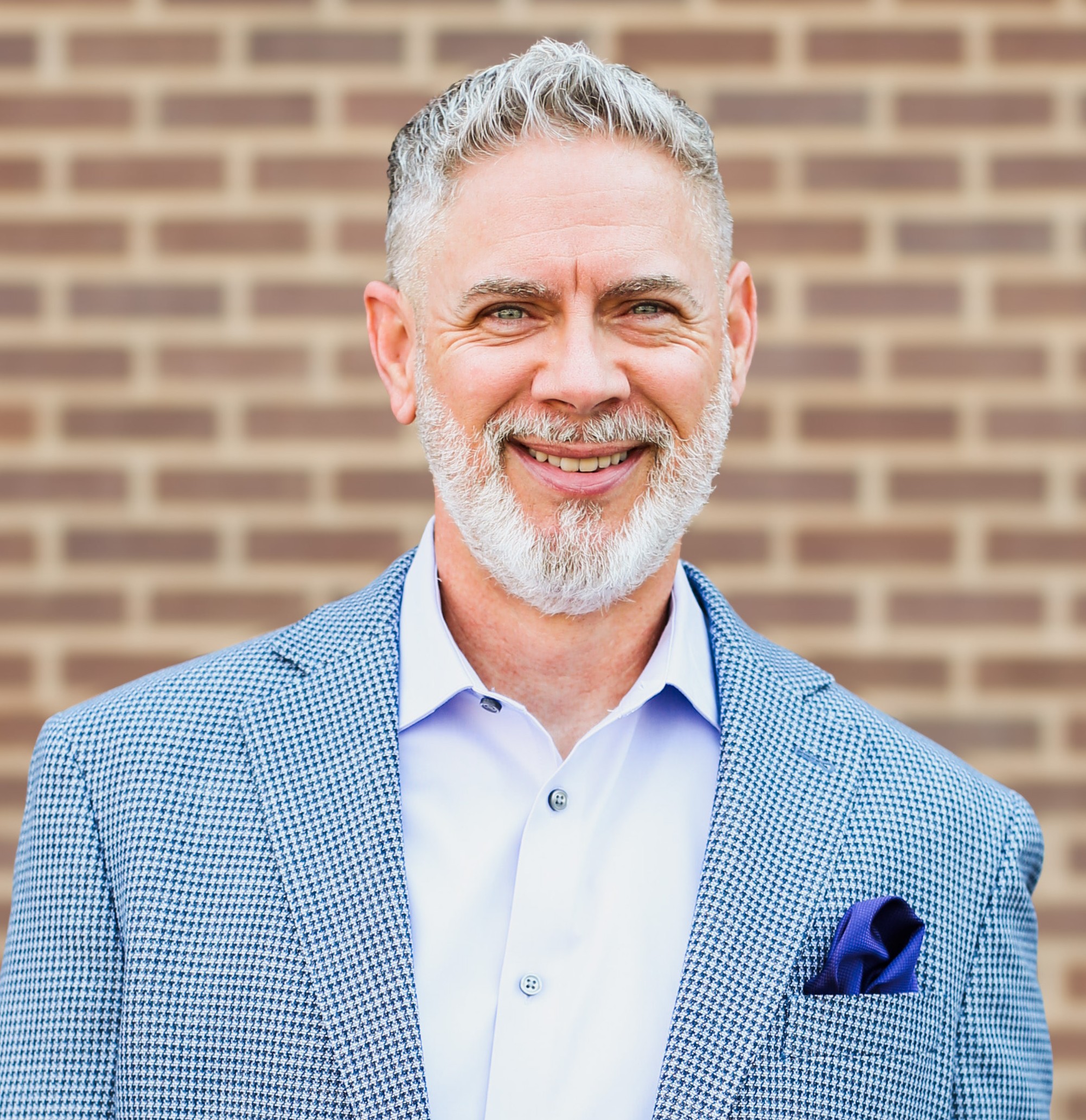
Colonel, USAF (Ret), Author and Leadership Coach
Colonel (Ret) Chris Russell is a decorated Air Force combat veteran and career Intelligence Officer whose military service spans more than two decades, including diverse assignments around the globe. Originally from Fort Smith, Arkansas, Mr. Russell was commissioned through the Reserve Officer Training Corps at the University of Oklahoma, where he earned a Bachelor of Arts in Psychology. Over the course of his career, he developed deep expertise in targeting operations, fighter squadron and wing intelligence, Combined Air Operations Center functions, and Special Operations.
Mr. Russell’s operational deployments include multiple tours in support of key U.S. missions in the Middle East and Afghanistan, including Operation Southern Watch, Operation Enduring Freedom, Operation Iraqi Freedom, and Operation Inherent Resolve. His career reflects a commitment to excellence and strategic leadership, with assignments at Special Operations Command Central, U.S. Special Operations Command, and the Pentagon, where he served as the lead speechwriter on the Air Staff for the Deputy Chief of Staff for Intelligence, Surveillance, and Reconnaissance.
He commanded the 22nd Intelligence Squadron at the National Security Agency and held a variety of leadership and instructor roles at the U.S. Air Force Weapons School, reflecting his reputation as both a warfighter and mentor. His academic accomplishments include a Master of Science in Aeronautical Science from Embry-Riddle Aeronautical University, as well as professional military education from the Squadron Officers School (Distinguis… Read More
